When there was the forest
 Nature has unique ways of reaching out to our deepest
corners. I remember a trip to the forest with my first team. That was more than
10 years back. It is a trip that none of us will ever forget. an affair of only
3 days which clings on to our consciousness even today after so many seasons
have gone by. And every now and then all of us have that urge. That wish, to
relive the experiences of those three days. In fact we had three more trips
with the same team subsequently. I have travelled out with most of my
subsequent teams. However that experience was never matched.
Nature has unique ways of reaching out to our deepest
corners. I remember a trip to the forest with my first team. That was more than
10 years back. It is a trip that none of us will ever forget. an affair of only
3 days which clings on to our consciousness even today after so many seasons
have gone by. And every now and then all of us have that urge. That wish, to
relive the experiences of those three days. In fact we had three more trips
with the same team subsequently. I have travelled out with most of my
subsequent teams. However that experience was never matched.
A complete description of the trip will take a full
blog in itself. let’s just say that in a continuous indulgence in camaraderie, alcohol
in all forms, marijuana, simpleton villagers, the beauty of nature and more
importantly indulging in the process of self-discovery as a team (without
knowing about it) for three days we ended up experiencing something unique and
rare. Something which could perhaps happen only once in our lives. Because once
one had experienced such a process of self-discovery the same cannot be
repeated again.
Gautam Ghose made Abar Aranya. He should never have. Perhaps
he never had an experience like ours. The experience of the characters in ADR
could never be replicated or surpassed.
Aranyer Din Ratri (Days and Nights in the Forest- ADR)
is a movie which will remain in our senses for years to come. Often passed off
as "a coming of age" or "boys to men" men movie by critics
of this country who are more often than not nothing but imbeciles, this movie
is one which actually talks about self-discovery. Four young men from the urban
Kolkata- men who were the youth of that age. Men full of urban confidence. And
men who learnt a thing or two about themselves, about love, life, and the world
at large.
There was Ashim the suave urban well to do executive
with the car, the Ashim who sneaks indulgence in female company while his self-consciousness
in that same company holds him back. There was Sanjoy- the most unlikely labor
executive one can find. Hari the cricketer who thinks more through his
genitilia than brain. And walks around with this sense of male bravado and
chauvinism which gets punctured all so easily. The jester in the group- Shekhar
is the most balanced and practical of all. But also the least interesting
beyond a point.
Then there are the women. Three of them. The sharp
wise and yet vulnerable Aparna whose independence of thought and sharpness
defeats the vanity and sense of intellectual superiority which Ashim has. Sanjoy
gets attracted to Jaya who is perhaps much more than what she seems to be. And
the cricketer Hari gets his carnal uprising from the santhal girl Dhuli. Played
by Simi in black. maaan! I would do anything for such a santhal girl! Bomb all
the intellectuality and the cerebralism in the world....
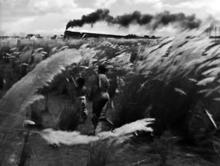
And finally the forest. Vast dispassionate and distant
in one moment and the all-embracing all-encompassing reality in the next. I
have always believed that humanity comes close to itself in front of the
grandness of nature. Ray has always shared this belief. The scene of realization
of loss in Apur Sansar when Apu lets go of his manuscript in the mountains. So
many of the scenes from kanchen jungha. But most definitively in ADR. The
premise of the film rests on the forest. The story would not have held had the
forest not been there. Yes- like many other films the forest does not become a
character. But it is there constantly in the background giving the canvas for
the lead characters to paint their own stories. The stories of these characters
intertwining and colliding to teach each other change each other and make each
other realize the entity within themselves. All the while the forest looks on.
There is a certain point in which one shifts from
being a boy to being a man. I believe it happens in a moment. The realization
is instant. After that flex point has gone we all keep revisiting our boyhood
by indulging in similar activities and creating similar atmosphere in our
lives. However deep inside we know that life has moved on. This film in many
ways is about that moment for the four friends. Yes that way it is a
"coming of age" movie. But it is so different from the genre! It is
actually a study of the human condition in that stage of the life. Not a
narration of events like most other "coming of age" cinema. The real
win of the movie however lies in the sheer effortlessness of the achievement. The
film manages to shed as much light on the human condition as most, without
seeming to even try.
There are many times when this movie keeps coming back
to haunt me, the four friends, the women, they all represent those moments which
I have left by the road in my life so far. Those moments where things could
have been and did not. So many moments lost. But so many gained... if keeps
coming back to me to remind me of a different time, a different me. It is when
the man looks back at the boy and smiles that indulgent smile of knowing it.
ADR is one of the most personal films for me.
Bad company
 There was a movie made in the early seventies- 71 to
be accurate. And the scenes of the movie keep haunting me today more than four
decades later. Ray movies seldom shock. They always haunt. Subtle insights and
messages which get hooked to our consciousness keep following us for long after
we have seen the movie. Even today I keep thinking of Barun Chanda's Shyamal
and his reactions during his interactions with the labor officer. The visible
discomfort and yet the dependence. The relation between the suave and
sophisticated genteel and the slimy, scheming and dirty. An intercourse of
mutual convenience where no partner is there for the love or enjoyment, but for
a different need. Also the reflection on the fakeness of the upper middleclass
morality. One deft stroke from the artist and a picture so vibrant and so
clear. Many of his contemporaries who criticized him for not taking up social
real issues needed to note. The difference between the cinema of ray and others
was perhaps the difference between art and propaganda. In a few scenes
brilliantly underplayed to perfection by Barun chanda, the fakeness and
spinelessness of bourgeois was communicated with a hint of a smile without any
loud sloganism.
There was a movie made in the early seventies- 71 to
be accurate. And the scenes of the movie keep haunting me today more than four
decades later. Ray movies seldom shock. They always haunt. Subtle insights and
messages which get hooked to our consciousness keep following us for long after
we have seen the movie. Even today I keep thinking of Barun Chanda's Shyamal
and his reactions during his interactions with the labor officer. The visible
discomfort and yet the dependence. The relation between the suave and
sophisticated genteel and the slimy, scheming and dirty. An intercourse of
mutual convenience where no partner is there for the love or enjoyment, but for
a different need. Also the reflection on the fakeness of the upper middleclass
morality. One deft stroke from the artist and a picture so vibrant and so
clear. Many of his contemporaries who criticized him for not taking up social
real issues needed to note. The difference between the cinema of ray and others
was perhaps the difference between art and propaganda. In a few scenes
brilliantly underplayed to perfection by Barun chanda, the fakeness and
spinelessness of bourgeois was communicated with a hint of a smile without any
loud sloganism.
Shyamal, the perfect man of the seventies. Shyamal-
someone with whom I can relate to a lot. Shyamal the man who was once someone
else. An idealist student. Shyamal who now looks back to those days with
superficial humor. Humor of a man at unease. A man who has chosen the easy way
out. A man who keeps telling the world that he has no regrets while deep inside
he is not so sure. But then it does not matter. The pay is good. The flat in Shakespeare
sarani even better. With a trophy wife who is more glamorous than she is
intelligent the circle is complete. That is Shyamal the perfect man. Tutul
comes in. Tutul the ravishing, seductive and yet so imperfect alter-ego. Tutul
whose passion reminds Shyamal of what he once was?
Then there was the next promotion and the small slip
up which could blow up into something so big. Then came the compromise. And the
final departure. The final dip into the murkiness of the corporate. The hated
IR fellow suddenly becomes the partner of convenience. Immoral harm caused to
poor factory-workers to cover up managerial misses. The completion of the act
of conversion of Shyamal the ethical idealist into Shyamal the successful
corporate citizen comes about. In almost a matter of fact manner. Tutul the
alter-ego is there. She understands. But then how does it matter?
The legendary staircase scene in the end of the movie
is a sharp reminder to all of us of our potential lives. The deed done,
promotion secured, Shyamal walks into the apartment complex. The Shyamal whose
last strand with the original self has been detached. The electricity of the
apartment is down. The lift is not working. Shyamal has to walk up to his
apartment on the seventh floor. It’s a long climb. Every step takes away a bit
of his energy. This tiring life in the race where every milestone takes away a
part of our being. And yet we keep running in the race. We have given it the
apt name of "rat race". But we keep forgetting that the rats who are
running are us.
Seemabadha remains one of my favourite movies. It talks
about my class, my people. It talks about what I am today and what my peers
are. It was made 41 years back. Every time I make a new compromise the facial
expressions of Shyamal flashes by. When he finally walks into the house only to
remember that the fan will not work. Seemabadha means limited. The English name
of the movie was company limited. Perhaps it actually shows how the company
limited us as humans...
The naughty wife
 Every day we are inundated with the films on
extramarital affairs. The heroines and the heroes keep engaging and questioning
the boundaries of modern middleclass morality. for most film directors this
becomes a premise for skin show- still a sure shot way for selling a product
even after the internet porn psunami.be it Diane lane in unfaithful or mallika
sherawat, skin sells. There has been artsy stuff too- and many of them around
this topic.
Every day we are inundated with the films on
extramarital affairs. The heroines and the heroes keep engaging and questioning
the boundaries of modern middleclass morality. for most film directors this
becomes a premise for skin show- still a sure shot way for selling a product
even after the internet porn psunami.be it Diane lane in unfaithful or mallika
sherawat, skin sells. There has been artsy stuff too- and many of them around
this topic.
When ray made Charulata- the story of a wife
developing interest in her brother-in-law, the contemporary expectation would
have been another sound melodrama. The hints on the relationship in the novel
were very subtle and readers and critics of the time chose to almost ignore the
same especially given that cheating is a bad word and attributing it to a
Tagore creation was almost a taboo. Ray’s Charulata (from Nashtaneer by Tagore)
made those hints a little less subtle and more direct. So even though they
remained only hints, the populist newspaper critics of the time did not take
very kindly to the movie. They also went on to say that most of the movie's
first part was almost Greek to the viewer as there is hardly any dialogue or
words exchanged. And that Charu looked more like a nymph burning in her desire
than a lonely housewife looking for company. The critics were obviously not
very pleased.
The fact was that the critics were simply not ready
for the kind of cinema ray was making. And ray was not ready for taking the
garbage they were throwing. I have firmly believed that criticism needs to be
objective and topical. However most films critics that I look around rarely do
that. There is a dire need to be clear in your head when you are critiquing
art. Like I can say that a certain character in a movie has confusing behavior
and hence I suspect that the characterization is weak. But I cannot say that
the story has weak characterization without qualifying my statement. Unfortunately
most critics (I strongly believe critics are wannabe artists who have this wet
dream of being a great artist) lose their objectivity while criticizing.
Ray had written an article defending his movie. It was
also an article where he brought out how a director converts a written
story/novel into a film script and then a movie. Many times we keep hearing
people say "not as good as the novel". Well comparing a film to a novel
itself is height of stupidity. Novel is a written text. There the writer can
write a thousand pages to describe one character. In a film how do you
communicate a "character"? There is huge scope of visual imagery in a
book- in the head of a reader. We imagine how a certain character will look
like because in a book as there we are free to imagine. In a movie there is no
such scope for the viewer. Similar handicaps exist in describing situations. I
can describe the site of an old western gun battle in 10 pages. But the film
gets 1-2 seconds to present the same to the viewer. Ray was the first person to
talk about this. And to share his methods of dealing with these handicaps. Ever
since, this article has become one of the film making bibles of our times, the
world over. Do read it if you are interested in cinema.
History has agreed again and again that Charulata was
one the most accomplished films of ray. More than the content, more than the
performances, more than anything else, perhaps the biggest achievement of Charulata
was that it played a significant role in developing the grammar of film making.
More specifically, the grammar of literature to cinema. my attraction and need
of watching the movie multiple times over the years was exactly this- learning
the craft of film making- the craft and language of making a piece of
literature into film. Frankly this work has not been the one that I have
related to very closely on an emotional level. However I like thousands of
other film enthusiasts have learned so much. Small moments which taught a lot.
The famous looking glass scene. The effortless
communication of a situation where someone creative, intelligent and playfully
young is forced into a life in a void. The looking glass became such a potent
communicator. The character which the glass caught, the mild amusements and
interest in variety. The single moment when her husband Bhupati informs her of
the arrival of Amal- Charu who was observing Bhupati through the glasses takes
it away in one jerk and simultaneously the camera does a sudden zoom out. The significance
of impact of this news to Charu is communicated. Unlike the writer the film
director did not have or need to use pages of back ground narration to
communicate this?
400 blows, battleship Potemkin, breathless... in my
view Charulata belongs up there along with these classics. Classics which in
more way than one the way cinema is being made in today's time.